Tampilkan postingan dengan label Exercise. Tampilkan semua postingan

Rabu, 09 Agustus 2017

Chronic Illness And Exercise


Today's post from myneuropathyandme.blogspot.com (see link below) is written by the same author as yesterday's post and talks about the difficulties neuropathy patients face when they are told they need to exercise. It tells of her own personal experiences with exercise and gives some very sensible tips on how to set about it. We know we have to exercise but we also know our body is going to give us hell for doing it, so the trick is to find easier ways of exercising without putting too much stress on our feet, legs, arms or wherever the neuropathy is most evident.


Exercising with a Chronic Illness
Posted by Tracy Love Thursday, June 6, 2013

Everyone who is suffering with a chronic illness or even pain has heard the doctor say that exercise is good; in fact, most of us knew that, even before the doctor told us that we need to exercise. Before I was so lucky to be diagnosed with Small Fiber Neuropathy, I exercised six days a week for at least an hour a day. I was extremely active and loved being in the Phoenix sun, even when it was 110 degrees outside, I could find an exercise I could do to keep me moving. From walking, hiking the Phoenix Mountains, water aerobics, training for marathons, biking, whatever it was, I loved it. I began working out in 2006 when I joined Weight Watchers to lose 170lbs. I did a lot of exercising a loved every minute of it.

Having Small Fiber Neuropathy and all the different drug trials and fails has put weight back on my body. I cried for the first six months as I got on the scale. I worked so hard to lose the weight, now I was watching it creep back on. But, my sweet husband told me not to worry that one day I will get back there, but my health was more important than a size 10 jean. Then he said "I love you." I think I'll keep this man :-)

Doctors tell us that we need to exercise to improve our heath, I will agree, but it’s not the wanting to exercise, it’s the inability to handle the pain the exercise puts on our chronically ill bodies that matters. I have found over the past year a solution. I think just walking is enough? Like, walking through the aisles at the grocery stores, the malls, parking lots, doing everyday chores such as laundry, sweeping and mopping floors, and cleaning bathrooms. To me this is enough to get my heart racing. Not as much as when I was training for half marathons, but at least my body is moving. But if you want to start exercising, I say start slow. Start with ten minutes a day and work your way up to thirty minutes a day. If ten is too much, break it into six five minute intervals. We all know that exercising will most likely hurt tomorrow, but we are always hurting tomorrow, and I know I am we willing get my body moving again.

There is an article on exercising and nerve pain that states "For many of us, exercise hurts. We often equate athletics with muscle aches, stomach cramps, sore knees, and tired lungs. But, for those with neuropathic pain, exercise can offer a rare refuge from agonizing discomfort." Click here for article

Now that the weather is warmer and my pool has heated up enough, I got back in to workout by doing water aerobics. I love working out in the pool. The water is cool enough so I don’t sweat and overheat and my muscles and joints aren't paying the price like the pounding pavement. Did you know that jogging in the pool is twelve times more the resistance as walking on land? And it doesn’t hurt while doing it. Yes, sometimes it does hurt the next day, but I love exercising in the pool. I can do a 30 minute workout in the cool water and I burn up as many calories as walking 30 minutes in the hot sun.

There are times though that I have to give my body a little pep talk. “Ok, body, we’re going out there and we’re going to give it our all. Yes, you’ll feel some pain, maybe while working out, maybe it won’t happen until later or even tomorrow, but we’re going to move today, so let's not be lazy, let's get moving!” I am tired of this disease having all the control. There is nothing I have experienced in my life that is more aggravating than telling my body to do something and it only does it half way. I now use a shower chair to take showers because it hurts to stand and I get dizzy while showering. There’s nothing scarier than thinking I’m going to get dizzy, fall down in the shower and having the fire department come rescue me. If I weighed 60lbs less, I wouldn’t worry too much HA! So the shower chair helps alleviate any of those nightmares. Trying to even wash my hair brings on added pain in my hands and arms. I wonder how many calories I burn from doing this. And can I count it as moving?

I can’t say what exercise is right for your body, but I do know that moving is right no matter what you’re doing. Try working out in the pool if you have access to one. If you don’t, maybe join the YMCA or a gym that has a pool. Bake some cookies and bribe your neighbor to use their pool. If you own a dog, a little walk after dinner is good for both of you, even if it's just five minutes Fido will love whatever you can give him.

I need to accept for myself that it’s going to be a long journey to get back to where I once was weight wise, and maybe I will never be a size 10 again, but I can be healthy. That’s what exercise is all about anyways, to be heart healthy. I also understand I’m going to have setbacks, flare ups and struggles on my journey. I have set a goal to workout at least twice a week if possible. I need to be patient, understanding, and listen to my body as I move forward. I want to reconnect with my body and tell it who’s the boss instead of the other way around. This will also help me to become stronger, physically and mentally. Summer is here and my pool is ready to jump in and start jogging, jumping, twisting, bending and swimming. I’m ready, are you?

http://www.myneuropathyandme.blogspot.com/

Senin, 19 Juni 2017

Get Exercise treatment for sciatica nerve pain


Exercise treatment for sciatica nerve pain can be considered one of this great article below the nowadays We know from the record google To be able to supply useful info to people we have attempted to locate that next importance shots available Exercise treatment for sciatica nerve pain And additionally right you could watch at this time, these kinds of photos are already obtained with the main aid.

Pics Photos - Relief For Sciatica Pain Sciatica Back Pain Exercises Exercises for You - Sciatica Treatment Sciatic Nerve Pain Treatment – Symptoms Relief Exercises Gallery images and information: Sciatic Nerve Exercises Pdf St. Louis Sciatica – Sciatic Nerve Pain – Sciatica Treatment

They will are around for down load, if you need along with would like to get it just click rescue logo relating to the document, together with it’ll get straight away bought with your portable computers. As a final point if you would like attain completely new in addition to most current video relevant to Exercise treatment for sciatica nerve pain , i highly recommend you observe united states for bing and also and also take note of this web site, most people look at all of our most effective to present you each day upgrade by using excellent plus unique subject material. Produce your own . that suits you each of our site.

Exercise treatment for sciatica nerve pain - it's also been placed considering the hope that should simply just in the position to entice required nearly everybody. This short article may function like a research when you find yourself perplexed to find the appropriate guidebook This Exercise treatment for sciatica nerve pain threads can be your easiest solution to remain utilized on their work schedule, the way it possesses its very own approach will probably think far more content Exercise treatment for sciatica nerve pain - Valuable suitable for you for this reason people are attempting get a stable reference which will will assist you to obtain idea without the need of misunderstanding. never forget to help you store this site, considering it's possible that sometime you will have the application once again when a person's inspirational strategies.


Jumat, 26 Mei 2017

Exercise And A Better Lifestyle Improve Neuropathy


 Today's post comes from denverpost.com (see link below) and is written by a certified fitness trainer. It talks about what you can do to help neuropathy problems in terms of exercise. You may think it's a little simplistic but the fact is that exercise is important for neuropathy patients, even if it is just to strengthen your frame and muscles so that they can bear the weight of your body better when your feet and legs aren't playing by the rules. As a whole, there is some good advice here for people who haven't yet accepted what they ought to be doing. You can only do what you can do, so if it is too much then take it easier and try to build up to more each week.


Exercise and weight control relieve peripheral neuropathy

By Linda J. Buch

 Q: I have diabetes and have been told I have peripheral neuropathy as a result. What kind of exercising can I do? — J.J. Gruber, Newark, N.J.
A: The Neuropathy Association reports that more than 20 million Americans have peripheral neuropathy, which is defined as a problem with the nerves that carry information to and from the brain and spinal cord to the muscles, skin, joints and internal organs. This causes numbness, pain, weakness and poor coordination. It is important to contact a neurologist for diagnosis and treatment as soon as symptoms are noticed to avoid or slow permanent damage.

According to the National Institute of Neurological Disorders and Stroke, peripheral neuropathy can be caused by:
• Physical injury or trauma to a nerve, often from repetitive motion or pressure from a cast or crutches
• Tumors
• Toxins and/or exposure to poisons
• Autoimmune responses such as lupus and rheumatoid arthritis
• Nutritional deficiencies, especially of vitamin B
• Alcoholism
• Vascular and metabolic disorders such as diabetes
• Genetics

The staff at the Mayo Clinic recommends the following steps to treat this disease:

1. See your physician for medication and pain relievers, including lidocaine patches and possible antidepressants.
2. Eat a healthy diet. Be sure to include B-12 food sources (meats, fish, eggs, low-fat dairy and specially fortified cereals) to get a diet rich in fruits, vegetables and whole grains. B-12 supplements may be required if you are a vegetarian.

3. Take care of your hands and feet. Check every day for blisters, cuts and calluses. Do not wear tight shoes or socks.

4. Exercise. Consistent and regular exercise can relieve pain and will also keep weight under control, which will relieve pressure on the feet and improves circulation to the extremities.
5. Reduce or eliminate alcohol consumption, which adversely affects circulation.

6. Quit smoking. Smoking also adversely affects circulation.
7. Massage hands and feet daily. Massage not only improves circulation but also stimulates the nerves and can temporarily relieve pain.

8. Avoid prolonged pressure on hands and feet. Be careful with crossing your legs, standing for great lengths of time or leaning on your elbows too long. This can make your current situation worse and cause new damage to the nerves.
Archived reports at the independent medical research database, the Cochrane Library, suggest that strength training can be effective for those with this disease. Even though most of the research on strength training for neuropathy was tested on people with diabetes, the research results have been consistent: Those who participated in the resistance- training program moderately improved muscle strength. Improvements in being able to perform basic daily activities — such as walking to and from cars — were also reported.

Other suggestions are walking a little bit each day (followed by massaging the feet), water exercise classes, yoga or other stretching regimens, tai chi and/or qigong, Pilates and using a stationary bike. Always start slowly and increase speed or intensity of any exercise cautiously. Squeezing a soft ball has been found to be helpful for the hands. Warm baths and acupuncture can help too.

Linda J. Buch is a certified fitness trainer in Denver

http://www.denverpost.com/fitness/ci_18016919


Kamis, 19 Januari 2017

Exercise tips for neuropathy


This post comes from the blog of Sam Page, an L.A. fitness trainer (see link below the post). Good advice and simple exercises that everyone can follow.

Exercise Slows, and May Reverse, Peripheral Neuropathy

I was recently diagnosed with peripheral neuropathy. I still have feeling in my fingers, but I’ve lost most of the feeling in my toes. Do you have any advice on ways I can manage this condition through exercise or supplementation?
—Lee, Cheyenne, WY


Peripheral neuropathy causes pain (sometimes described as tingling or burning) and numbness in the hands and feet. While HIV is one cause of the condition, it’s certainly not the only one. Diabetes and cancer treatments (such as radiation or chemotherapy) are also common causes. Sometimes the condition improves with treatment of the underlying cause, sometimes it doesn’t.

Resistance training is a great way to improve overall muscle strength, especially for people with peripheral neuropathy, and there’s research to prove it. In a 2006 study, subjects who walked for 1 hour, 4x/week, slowed down the worsening of their peripheral neuropathy.

Researchers at the University of Louisville showed that lower-body weight training (30 minutes 3x/week) improved muscle strength and quality of life in patients doing such routine tasks as walking to the car.

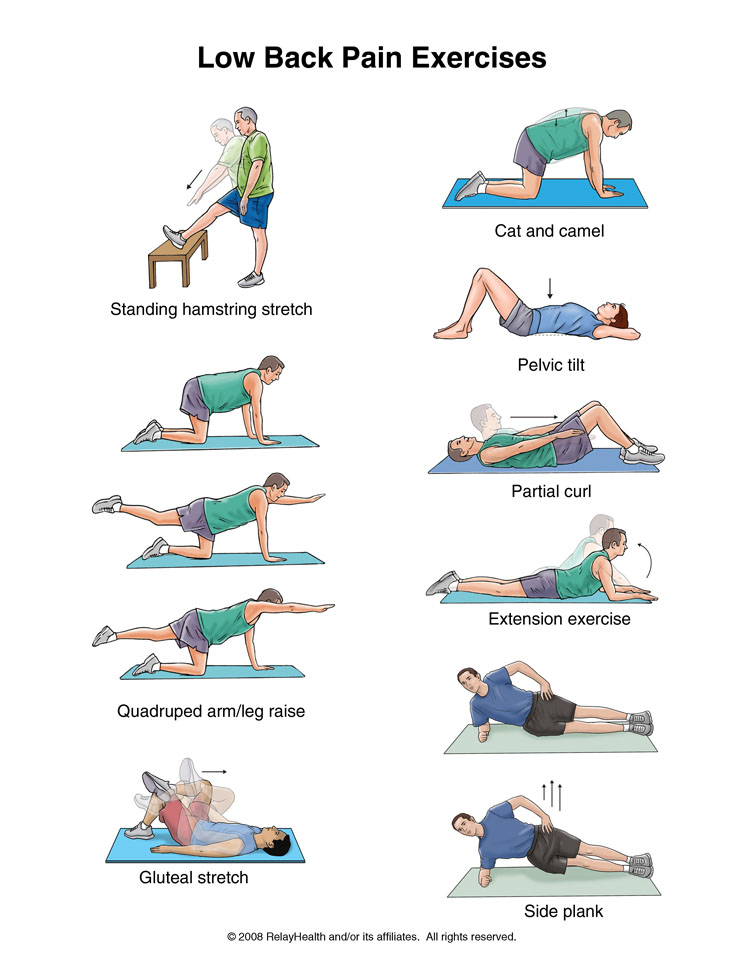
You should avoid high impact exercises (e.g., running on a treadmill or jumping up and down) because they more often result in foot injuries. Seated resistance exercises are an excellent choice, as are swimming, rowing, and pretty much any upper body exercise. If you don’t have access to weight machines, you can try these simple movements anywhere:

Hands — Touch the pad of your thumb with the pad of the index finger, moving the index finger down to the base of your thumb. Repeat this movement twice with the index, middle, ring, and little fingers in succession.

Legs & Feet — Straighten one knee and point your foot. Flex your ankle five times. Next, circle your ankle clockwise, and counterclockwise, five times each.

Balance — From a standing position, rise up slowly on your tiptoes, and then go back on to your heels. The knees should be kept straight, but not locked.

Bottom line: Exercise may not actually reverse the condition, but it can most certainly help. —S. Page

http://www.peacelovelunges.com/sports-fitness/ask-sam/will-exercise-help-my-peripheral-neuropathy/