Today's post from foundationforpn.org (see link below) and written by two oncologists looks at one of the most popular new electronic impulse devices for reducing nerve pain - the Scrambler therapy. Their only motive for using this technique that sends non-pain signals along the same nerves that pain signals travel (different to TENS therapy) seems to be in trying to attain some relief for their patients who have neuropathy through chemotherapy treatment. In their own small-scale trials, they achieved significant success using the Scrambler technique. The point is, that in these days when drug treatments for nerve pain have such a bad press, everybody is looking for the best possible, non-drug and non-invasive treatment. Scrambler therapy may just be such a workable option in the future. The problem is, as so often, the cost. The machines are expensive but I would suggest that the cost of a Scrambler machine is far outweighed by the cost of a life long treatment with drugs and medical services for your typical patient with severe neuropathy. Scrambler therapy already exists, so further trials and research on larger groups seem to me a no-brainer. That said, other electrical implant therapies for nerve pain have been shown to be less than consistent in their results but then again, you could say that for every single neuropathy treatment you can imagine!

December 9, 2016 by Dr. Thomas Smith and Dr. Charles Loprinzi
What is neuropathic pain, from the non-expert oncologist’s point of view?
The way we think of it, pain is about the most protective instinct and impulse known to humans! If you touch a hot plate, you retract your hand even before you actually feel the pain. Then, the pain comes – very localized – such that you can plunge the hand into cold water. After that, usually the pain goes away and you can then blame your son-in-law for leaving the hot plate on. But sometimes, the pain signal gets stuck in the “on” position, even though your hand has healed. There has been some damage to the nerve endings, and they are continuing to send the “pain” impulse when it is not doing you any good. The pain pathways in the spinal cord and the brain actually get bigger and more active; neurologists call this “wind-up.”
Pain has come to the attention of most oncologists because we CAUSE it with chemotherapy agents; we call it chemotherapy induced peripheral neuropathy (CIPN).
For the unfortunate 40-70% of chemo patients who get CIPN, it can range from being a nuisance to being life-destroying. Our patients describe constant burning or pins-and-needles pain, with numbness and tingling. It starts in the longest nerves that go to the hands and feet first, then progresses upstream. For many people it is just an inconvenience, and goes away in between chemo cycles and abates after treatment. But for others it persists, for years.
Preventing or treating CIPN has been frustrating. We both were part of the American Society of Clinical Oncology panel that made national clinical practice guidelines for CIPN. There are no drugs proven to prevent it, and alpha-lipoic acid, Vitamin A, natural products, L-carnitine – things that help in other neuropathies – were no better than placebo. Only one drug is proven to help, duloxetine (Cymbalta), with a reduction in pain of about 1 point on a 10 point scale.
Of course, there are other neuropathic pains that oncologists know all too well. The pain from a pinched nerve leaving a collapsed or damaged vertebra, shooting down the leg. The pain after shingles, “post-herpetic neuropathy” that can last for years. The pain after chest surgery, or mastectomy, or radiation.
What is Scrambler Therapy, and How Does it Work?
Scrambler Therapy (marketed as Calmare™ therapy in the United States) is a new type of pain relief that uses a rapidly changing electrical impulse to send a “non-pain” signal along the same pain fibers that are sending the “pain” stimulus. We got interested in Scrambler Therapy because we thought it MIGHT help CIPN patients, and Scrambler Therapy appeared to be non-toxic. It had been cleared for safety by the FDA in 2009.
We were skeptical, but we did a trial of Scrambler Therapy. We treated 16 patients with refractory CIPN (present for at least 6 months, and refractory to medications); the group had a 60% reduction in their CIPN pain – in 10 days of treatment. Of the 16 patients we treated, essentially all reported some benefit, including 4 whose pain resolved to “0.” Function improved in most patients including less interference with walking and sleeping, for at least 3 months.
The setup is simple as shown in Figure 1 (Tom Smith’s legs). EKG electrodes are used to transmit the electrical impulses from a colored electrode to a black one, back and forth. The treatment is given for 30-45 minutes for up to 10 days in a row (excluding weekends). Our patients report a feeling like being bitten by electrical ants, or bee-stings. If the treatment is working, the sensation will change to a “hum” in the nerve and go to the ends of the nerve. We have to start above the painful area – remember, we are trying to replace the pain with a “non-pain” stimulus, and sometimes can work progressively down the legs and arms as pain relief occurs.
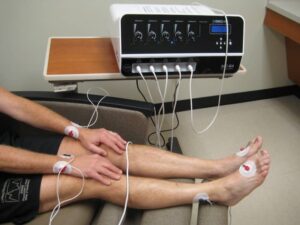
Figure 1: A typical setup to treat “stocking and glove neuropathy”
Colleagues at Mayo Clinic were skeptical and repeated the study in a larger group of people with CIPN. Pachman, Loprinzi and colleagues at Mayo reported about a 50% reduction in pain, numbness and tingling lasting at least 3 months. Of note, there appeared to be a learning curve, with the later patients getting better and longer lasting pain relief.
We will be the first to note that Scrambler Therapy lacks the “Good Housekeeping Seal of Approval” of cancer treatments – the well-designed, large, high statistical power, randomized controlled trial. We are both doing randomized trials, comparing Scrambler Therapy to “sham” (electrodes in the wrong place” and to TENS (trans-cutaneous electrical stimulation).
That said, we are interested in treatments that might work and don’t cause side effects. A recent review of at least 20 scientific reports noted no harm in any trial, with most reporting a substantial relief of pain. The two randomized trials comparing “sham” to real Scrambler Therapy showed a 50% reduction in low back pain, and a 91% reduction in pain from failed back syndrome, post herpetic neuropathy, and spinal cord stenosis. In all the trials, pain relief – if it happened – was obvious in the first 3 days, continued to get better, and usually lasted several months. There are additional reports of Scrambler Therapy having success in cancer somatic pain including bone and visceral metastases, complex regional pain syndrome, pediatric cancer chest wall pain, and others (see list below). The US Military has 17 Scrambler Therapy machines for treating both wounded warriors and civilians.
Some types of pain for which Scrambler Therapy has been used
Pancreas and abdominal cancer pain
Chemotherapy induced peripheral neuropathy
Non cancer pain such as neuropathic back pain
Post-herpetic pain (shingles pain)
Bone metastases
Spinal cord stenosis
“Failed back syndrome” – after surgery, the back hurts worse
Complex regional pain syndrome
Post-mastectomy pain
Is Scrambler Therapy Related to Anything Similar?
Scrambler Therapy looks superficially likes TENS therapy. TENS applies similar electrodes on the skin and passes a pulse of electrical current between them. TENS is a completely different type of on-off current, and, classically, the effect wears off as soon as the electrodes are removed. When Scrambler Therapy works, it seems to reset or reboot the system for an extended period of time.
Spinal cord stimulation appears to have a same effect on pain that Scrambler Therapy appears to have. However, it involves putting electrodes on the spinal cord, and implantation of a pulse generator, similar to a pacemaker. It is also expensive – typically near $100,000 for a trial, then surgery and the equipment. It can last for years.
Is Scrambler Therapy Covered by Insurance?
Quick answer, no, not very well yet. They are waiting for more traditional evidence (unlike the U S Military!) Some places are doing it for free on the clinical trials listed on clinicaltrials.gov. There is a list of certified centers on the Calmare website. An increasing number of insurers are paying for Scrambler if the person and their doctor appeals with lots of evidence from the trials above.
The machines themselves are expensive ($105,000 was the last quote we got) but can be used for a new person each hour, and last for years. The electrodes cost $4-15 dollars per person for a course of treatment. A person with training can do the treatment supervised by a physician with knowledge of the nervous system.
What research needs to be done before Scrambler Therapy is proven effective, and reimbursed if it is?
We have been using Scrambler Therapy routinely at our centers, and believe there is benefit to some patients. At the same time, we are humbled by the many therapies that have shown promise in phase II trials only to be no better than placebo or sham in Phase III trials. We need bigger randomized trials, sponsored by the NIH or someone who is not trying to sell the machines.
Dr. Thomas Smith is the Director of Palliative Medicine, Harry J. Duffey Family Professor of Palliative Medicine, Johns Hopkins Sidney Kimmel Comprehensive Cancer Center
Dr. Charles Loprinzi is Regis Professor of Breast Cancer Research, Mayo Clinic
https://www.foundationforpn.org/2016/12/09/scrambler-therapy-for-treating-neuropathic-pain/


