Tampilkan postingan dengan label Can. Tampilkan semua postingan

Minggu, 06 Agustus 2017

What Can Actually Happen To You If You Have Neuropathy


Today's post from neuropathytreatmentgroup.com (see link below) is actually an article attached to an advertisement for a neuropathy treatment and this blog does not support the treatment offered, nor any other form of advertising for so-called curative neuropathy products. Neuropathy is with you for life I'm afraid and all you can do is reduce the severity of the symptoms using chemical drugs or various alternative treatments and supplements. It can't be cured (at the moment), so please don't believe any website that tells you it can. HOWEVER, this article is packed with such useful and accurate information, I can only applaud the author and recommend the content to readers of this blog. It explains simply and clearly what can happen to you if you have neuropathy. Worth a read.


What No One Tells You About Neuropathy and Muscle Control
2016

 
Have you noticed your muscles acting a little strange since developing neuropathy? Perhaps they affect your ability to walk? Or maybe you find it difficult to use your fingers to pick something up? While we normally associated peripheral neuropathy with symptoms like pain, numbness and tingling – there are other symptoms as well.

The peripheral nervous system is made up of three different kinds of nerves: motor, sensory and autonomic. Each type of nerve controls different functions. Motor nerves send signals from the brain and spinal cord to your muscles – controlling motor functions like walking, dexterity and more. Sensory nerves do the opposite – relaying signals like temperature, pain, etc. from the muscles back to the brain and spinal cord. Finally, the autonomic nerves control involuntary or semi-voluntary functions like heart rate, digestion, blood pressure and more.

Peripheral neuropathy can affect some or all of these nerves. The symptoms you experience will depend entirely upon the type of nerve(s)that have been damaged as a result of your neuropathy. If your sensory nerves have been damaged you will experience symptoms such as pain, numbness, tingling or burning. Damage to the autonomic nerves can lead to problems with dizziness, sweating (either too much or too little), nausea, vomiting, diarrhea, constipation, difficulty urinating and more.

If your motor nerves fall victim to nerve damage – various motor functions can be affected. Lets take a look at five possible symptoms you might experience if your neuropathy has damaged your motor nerves:

Loss of balance and difficulty walking


Damage to the motor nerves can make walking difficulty. Your legs may feel heavy and difficult to move or you may feel constantly off balance. Since damage to the motor nerves disrupts the signals from your brain and spinal cord to the muscles – telling them what to do – even something as simple as walking can become a difficult task.

Damage to the sensory nerves can exacerbate this problem. The pain or numbness usually associated with damage to these nerves often affect the feet – making walking even more problematic.

For those suffering from symptoms related to motor nerve damage – extra caution should be used when walking on stairs or other areas where a fall risk is greater. Allowing extra time and avoiding rushing to perform tasks can also help limit your risk of falling.

Loss of Dexterity

Do you find it difficult to pick things up or use your hands to perform certain tasks? If so, that’s a sign your neuropathy has affected your motor nerves. Damage to the motor nerves can affect the ability of your brain to send signals properly to the muscles in your hands. You may notice somewhat delayed reactions in your hands or the muscles in your hands may feel weak – inhibiting your ability to perform even normal tasks like picking something up or moving your fingers.

Some common difficulties associated with loss of dexterity are inability to grip objects, loss of hand strength, difficulty writing or typing, difficulty performing tasks that require small movements, decreased reflexes and more. While you may not be able to restore complete control or strength to the hands – doing regular hand exercises can help you rebuild and maintain muscle strength and improve dexterity control.

Muscle Weakness; Deterioration

As damage to your motor nerves inhibits the ability of your brain and spinal cord to transmit messages to your muscles – you may find yourself limiting the use of your arms, legs, hands and feet. For many, this decrease in physical activity results in muscle deterioration and weakness. As the muscles deteriorate, you lose muscle mass and tone (this is often referred to as muscle atrophy).

Muscle weakness further contributes to the loss of dexterity, balance and difficulty walking previously mentioned. While exercise is often difficult and pain for those with neuropathy – there are low-impact exercises that will help you retain muscle mass and prevent muscle deterioration.

Try these 5 Low Impact Exercises for Neuropathy if you’re experiencing muscle weakness or deterioration!

Cramps; Spasms

The deterioration of muscle mass and the disruption of signals from the brain to the muscles can also lead to painful cramps, muscles spasms and twitches. For many, the cramping strikes at night and can range in severity from mild to extremely painful. In addition to cramping, many experience uncontrollable spasms or muscle twitching – which is visible just below the skin. While not as painful as cramps, they can be quite bothersome.

Loss of Muscle Control

As we’ve already touched on with the sections on loss of balance and dexterity – damage to the motor nerves affects your ability to control your muscles properly. The motor nerves carry messages from the brain and spinal cord to the muscles – telling them what actions to perform. As this line of communication is disrupted – the ability to control muscles is diminished. This is made manifest in loss of reflexes, inability to move hands or feet quickly, difficulty with fine motor tasks (i.e. buttoning a shirt, writing, etc) and more.

While the most common symptoms associated with peripheral neuropathy are pain, numbness, burning or tingling in the hands or feet – they are not the only symptoms. When the motor nerves fall victim to neuropathy the symptoms can go far beyond pain or numbness. They can affect your ability to control muscles and perform otherwise simple physical tasks. Though you may not be able to completely reverse these negative effects, alternative approaches like exercise can help you build and maintain muscle mass – thus helping to minimize the impact of motor nerve damage.

http://www.neuropathytreatmentgroup.com/what-no-one-tells-you-about-neuropathy-muscle-control/

Sabtu, 08 Juli 2017

Can Acupuncture Help with Neuropathy


Acupuncture is one of those treatments that divides opinion. Most people reason that if it has worked for thousands of years in Chinese medicine, it must be good. That may well be so and we've all seen the TV clips of operations undertaken with acupuncture needles but without anaesthetics but like any other treatment, alternative or otherwise, evidence-based proof is needed that it works when applied to nerve disease. Neuropathy is such a difficult affliction that even experienced Chinese doctor/acupuncturists admit that acupuncture is very much a hit and miss method as regards effectiveness in controlling neuropathic symptoms. Nevertheless, many people have found relief from acupuncture sessions. Today's enlightening post from Natural News.com (see link below) explains how Chinese medicine sees neuropathy and its potential treatment with acupuncture.
Although not normally done on this blog; the footnotes and references are added at the end to show that the article is based on research and not just alternative theory.


Acupuncture Treats Peripheral Neuropathy
Wednesday, May 06, 2009 by: Melissa Sokulski

Neuropathy, or Peripheral Neuropathy, is defined as having numbness, tingling or pain in nerves apart from the spine or brain, often in the hands and feet (1). It is a fairly common symptom, occurring in people with spinal injuries, diabetes, and genetic conditions such as Charcot-Marie-Tooth Syndrome (2,3). Acupuncture can be an effective way to treat these symptoms, bringing energy, life and feeling back into the extremities.

Neuropathy is a serious symptom, which often affects people`s quality of life. When people don`t feel parts of their bodies, they are more prone to injury and infection, as well as finding difficulty in daily tasks such as walking, fine motor work, or gripping. People who have this symptom as part of a genetic disorder also deal with the fears and hopes that go along with having a rare medical disorder(4).

Acupuncture is a powerful tool not only to balance qi - or energy - in the body, but to bring peace, hope and alignment into the mind, emotions and spirit as well.

When there is numbness in the periphery, there is not enough qi reaching these areas, according to traditional Chinese medicine. This can be for a variety of reasons, but mainly either:

1) there is too little energy in that organ system/meridian (energy pathway)

2) something is blocking the energy from reaching the area.

Sometimes there will be a combination of the two, and often multiple organ systems/meridians are involved. There are also different causes for the condition. Each of these things is considered and addressed by the acupuncturist, and a treatment plan which best suits the patient is mapped out.

In general, treatment would involve selecting points that promote circulation of energy in the meridians. If heat or cold is the cause, treatment would include either dissipating heat or warming coldness.(5)

Sometimes, weakness and flaccidity in the extremities is classified as wei syndrome. According to Traditional Chinese Medicine, this results from malnourishment of the tendons due to depletion of body fluids, caused by "excess heat" remaining in the body after illness.(6) Wei syndrome often requires longer periods of treatment.

Acupuncture often brings immediate relief - especially when there is pain - though it will likely take a series of treatments for the feeling and strength to come back completely and for the body to stay in balance, providing lasting effects. How often or how long treatment should proceed will be individual, depending on the cause and the overall constitution and health of the patient. As mentioned above, Wei syndrome can require a long course of treatment.

Acupuncture works by treating the person as a whole, balancing body, mind and spirit and allowing the body to do what it needs to do to heal itself. Acupuncture helps remove blocks, helps the body focus on increasing energy in areas of deficiency, and helps the patient be more present and focused, but ultimately it is our own bodies and energy that are able to heal.

Footnotes:
1) http://en.wikipedia.org/wiki/Neuropathy
2) http://www.medicinenet.com/peripheral_neuropathy/article.htm#1whatis
3) Charcot-Marie-Tooth Disorders (from CMT Facts III, Special Report, p.24):
- CMT is the most common inherited neuropathy, affecting about 125,000 Americans
- CMT is also known as peroneal muscular atrophy and hereditary motor sensory neuropathy
- does not affect life expectancy
- can vary greatly in severity, even within a family
- is the focus of significant genetic research
4) Flapan, Mark, p.10 of CMTA Special Report.
5) Xinnong, p.444
6) Xinnong, p.443

References:

CMTA Special Report: CMT Facts III. Published by Charcot-Marie-Tooth Association. 2700 Chestnut Parkway. Chester, PA. 19013.

Flapan, Mark. Living With A Rare Disorder: Hope and Fear. CMTA Special Report: CMT Facts III. Published by the Charcot-Marie-Tooth Association.

Maciocia, Giovanni. The Foundations of Chinese Medicine: A Comprehensive Text for Acupuncturists and Herbalists. Second Edition. Churchill Livingstone. 2005.

Xinnong, Cheng. Chinese Acupuncture and Moxibustion. Foreign Languages Press. Beijing. 1990.


http://www.naturalnews.com/026211_acupuncture_neuropathy_energy.html

Sabtu, 11 Maret 2017

Can Tai Chi help with Neuropathy


When mobility becomes an issue for neuropathy patients, the ability to exercise is equally compromised. Many people find yoga extremely helpful but if yoga seems much too strenuous, then Tai Chi may well be a useful alternative. Today's interesting post from Emaxhealth.com (see link below) talks about a small Louisiana university study and trial that produced very encouraging results. It is sometimes difficult to find the medical reasons why something works but with neuropathy, patient feedback is the best reason for something to be investigated further. In this case, Tai Chi's ability to improve balance and confidence with walking and standing, deserves much more research.

Using tai chi to fight degenerative nerve disease
By Armen Hareyan on January 23, 2007

Tai Chi Treatment for Peripheral Neuropathy

Peripheral neuropathy is a degenerative nerve disease with no cure and few effective treatment options " until now. Li Li, professor of kinesiology at LSU, is conducting a study into the benefits of tai chi for elderly peripheral neuropathy patients. So far, those practicing tai chi show far greater levels of improvement that those pursuing more traditional methods of treatment.

Test results prove tai chi is more than just a mind game or a placebo it really works. Li's group conducts periodic scientific and medical testing to track each person's progress as they continue in the program. Other, more traditional methods of treatment, including walking and light machines, are also studied to compare the results to those gained from tai chi, but so far it is still the undisputed winner, producing improved flexibility, sensation and overall health.

Most patients report a significant decrease in falls, increased confidence walking and standing and are able to stop using walkers or canes after consistent and extensive participation.

The study, backed by little to no funding, started out in the summer of 2004 and was slated to last only a few months. But participants felt such improvement that they refused to give it up. So, in the fall of 2005, the study resumed with great anticipation and with funding from LSU s Department of Kinesiology. What was once a simple comparison between two forms of exercise walking and tai chi has now developed into a full-fledged study, utilizing the expertise of biomechanists, psychologists, physiologists and many others in order to gain a better understanding of the actual impact this exercise produces.

The program includes approximately 75 individuals, with breakaway groups meeting up to three times a week for lessons. Thomas Yajun, a tai chi master who moved to the United States only three years ago knowing little to no English, leads the classes through their routines, which take into consideration the group's general level of mobility. As they become more comfortable and gain more mobility, Yajun pushes them farther, constantly expanding their boundaries. "People wouldn't come if it wasn t doing something," Li said. "I mean, some of these people travel 50 to 100 miles round trip just to make it to our classes. For many of them, if they couldn't come to our sessions, which are offered free of charge, they couldn't afford to go anywhere else."

There are more than 150 people in the Baton Rouge area waiting join Li's study. But with only LSU's Department of Kinesiology sponsoring the program, it cannot support any additional participants. Parking and facility space are already posing a problem. Li hopes to receive funding in the near future that will allow him to expand the program so that it can help others fight back against the pain of peripheral neuropathy.

"I have really been helped by the program. My legs felt like they had bands around them and my feet would burn almost constantly. Since I've been here [approximately nine months], I've had only two episodes of severe burning and the bands, where as it was on a daily basis before," said Marian King, who, prior to joining the program was forced to stop working due to increasing difficulty with walking and standing.

"We're seeing great results, and we're very excited," Li said. "Some people started the program unable to stand, even with assistance, for more than five minutes. Today, these same people have no trouble standing independently."

"I was falling down in the house a lot. Sometimes I would fall down just by tripping. It's [tai chi] been a real improvement," said John Liebert, who only recently joined the program. "I fall down far less, and that's the big issue with me. It's not going to cure the disease, but it was never intended to be a cure. It has definitely helped my lifestyle. It's been a real improvement."

Source: Louisiana State University

http://www.emaxhealth.com/6/9096.html

Rabu, 22 Februari 2017

How Can Marijuana Help Neuropathy Sufferers


Depending on the laws and cultural attitudes within your own area, today's video about the usefulness of marijuana for pain problems (especially neuropathy) may or may not be relevant for you. Unfortunately, reactions to marijuana as a medical tool range from the hysterical and mistrusting to being totally convinced of its efficacy; much of the former is based on preconceptions stemming from various governments' wars on drugs as a whole. Many neuropathy sufferers already benefit from the use of medical marijuana but if you're a non-smoker, or an ex-smoker, you may find it much more difficult. The video suggests using vapourised marijuana, to avoid the worst lung problems but this does add to the expense, as well as being somewhat tricky to use. You also have to be able to accept getting high, which contrary to popular myth is not for everyone! Nevertheless, this video is a useful explanation of how marijuana works medically.


Sabtu, 11 Februari 2017

Can You Cope With Neuropathy Possibly!


Today's post from fithealthinsurance.info (see link below) is a nicely written advice article about coping with neuropathy. Yes it tends to lean on many of the things we've heard before about training our brains to cope with nerve pain but it doesn't speak down to you and provides a slightly different perspective, with a sprinkling of humour which you may enjoy reading. By the way, the book she mentions is not new but is a valuable resource nonetheless. Worth a look.


You Can Cope with Peripheral Neuropathy
Practical and uplifting insights from patient-expert and author Mims Cushing: August 31, 2016 

“You might not be able to manage your body the way you like, but you can manage your mind,” counsels Mims Cushing, who has been jotting down coping tips from patients and professionals since chronic nerve pain disrupted her life more than a decade ago. Those handwritten words of wisdom are now available in the new book, You Can Cope with Peripheral Neuropathy:365 Ways for Living a Better Life (Demos, 2009, $18.95).

“In 1996 my feet were constantly burning and numb,” she tells the Post. “My lifelines to sanity were The Neuropathy Association and Dr. Norman Latov—the neurologist who co-authored the book with me.”
 
The Top Ten


When neuropathy gives you fits and you’ve done your best to seek medical advice:

1: Be excited about the buzz regarding neuropathy. People don’t say, “Never heard of it” as much as they used to. There’s a sea change out there that is making it easier for 20 million people to deal with, track, and understand their condition.

Today, The Neuropathy Association (neuropathy.org) can provide the name of a specialist near you. You can receive newsletters by mail and sign up with Google Alerts for updates. Experts recognize different types of the disease and dozens of reasons for having it.

2: Be grateful. It’s hard to be stressed when you are thankful and appreciative. Stress surely makes your neuropathy worse. To be less frazzled, keep a gratitude journal. (It doesn’t have to be a Pulitzer Prize winner.) At bedtime, think about what you’re grateful for—don’t groan about what you did wrong during the day or make to-do lists. Saying “I’m so grateful,” puts a different, healing spin on your feelings.

3: Be open to everything that might help you.
Which technique seems out of place: acupuncture, meditation, tai chi, or drumming? Did you say drumming? Well, all of these methods (and others) are used for healing. I beat African drums at a senior center. Maintaining a powerful, constant rhythm is meditative. People in the class say their blood pressure and pulse rates go down. And on Tuesdays when I drum, my feet hurt less.

Dr. Jerome Groopman, renowned writer and physician, suffered an accident and was in pain for 19 years. Finally, he listened to a doctor’s advice to not give in to the god of pain. After one year of initially difficult exercise, he was pain free. I recommend Dr. Groopman’s books, including The Anatomy of Hope.
Consider new ideas you may have dismissed. And when you think about things you can’t do, remember that you now have the time to do things you may not have had time to do before your neuropathy: cook special recipes, research your genealogy, study a compelling topic, write in a journal, or create an indoor container garden.
And P.S.: Perhaps you must do some things differently, such as using a walker at the mall. But you can still do them.

4: Banish toxic people. You can wail about the curmudgeons in your life, slap ’em upside the head (which I don’t recommend), or ease yourself away—the best way to deal with them. Troublesome friends or relatives can make you sad or cause you angst, both of which make our illness worse. When my friend Madelyn heard someone was driving me nuts, she said, “Don’t let her rent space in your head!” Optimistic friends can help our spirit. Author Wayne Dyer says, “Your friends are God’s way of apologizing for your relatives.” Writer Judith Orloff calls the mean people in our lives “Energy Vampires.” Maybe you must be around difficult relatives during the holidays. Is it any wonder your neuropathy worsens then?

5: Focus on something greater than yourself—volunteer.
I believe people quit volunteer jobs because they haven’t found the right one. A pianist in Ponte Vedra Beach, Florida, volunteered at a local hospital and was asked to change the sheets in the Emergency Room. After a few weeks, he asked if he could go to patients’ rooms and play music on a portable piano. He found the perfect job for him.

Sometimes volunteering means listening. It’s powerful to say: “You talk. I will listen.” A man I know got some bad news from a doctor. As he was leaving, the doctor put his hand on my friend’s shoulder. And my friend suddenly felt better. The church handout, Our Daily Bread, says, “When we forget about ourselves, we do things others will remember.” And, I add, we think less about our pain.

6: Love your cabbages and caviar equally. Consider chores to be as meaningful as creative hobbies and other diversions. Next time you are ironing or emptying the dishwasher, realize that it’s of value. Don’t rush around.

7: Let the good stuff in. Floridian Eugene Richardson, a retired Lt. Colonel and brilliant man who has had neuropathy for 41 years, watches for life’s little miracles (they are all around), and not for things to worry about. Do you have UFOs, Uninvited Foolish Observations, flying around in your head? Take a break from all the craziness in the world. When you have a crummy day, write about it or have a first-class pity party. Restrict the party to seven minutes, and do it when you are alone. You will carry on longer if you have an audience. Yes, your family may need to help you in a myriad of ways, but don’t dump your complaints on them. The less you fuss, the more they’ll want to help you.

8: Be kind to your body. This does not mean eating ice cream smothered with Chicken Alfredo. But you can hurt your neuropathy by jumping on hard surfaces, or doing certain kinds of Pilates, says Dr. Alan Berger, head of neurology at Shands, Jacksonville. I’ve figured out two perfect places where we can exercise without gravity being an issue: a swimming pool and a space shuttle. I’m buying a space shuttle. They cost around $50 billion, so I may have to get it on eBay.

Keep hunting for the exercise that’s right for you. Many fitness centers offer chair-based programs, even for yoga. Just as we can choose to not read a book we aren’t enjoying, or walk out of a movie, we can decide to change exercises.

9: Enjoy your own company. Now, a great spouse is a wonderful thing. So is a true friend, someone who will listen when you call at 3 a.m. But nurturing solitude is important, too. Find your own private place of peace: a park, a beach, the mountains, or the sea. Drive there or maybe just visit it in your dreams. Find stillness in solitude, and solitude will bring you peace.

Friends are not always available. YOU, on the other hand, are always available. Don’t beat yourself up because you have neuropathy. Treat yourself like gold. If you do that, you’ll treat others like gold, too.

One of my favorite sayings from writer Mary Gordon is, “I never feel so accompanied as when I am on my own. And I have figured it out. It is because God is beside me.” Another quote I love is, “You cannot see yourself in a rushing brook, only in a pond of still water” (Zen).

10: Embrace things that can embrace you back. Money can’t. A house can’t. Nor can a car or jewels. Friends and family can embrace you, and a dog can embrace you with a wagging tail. A cat’s purr is an embrace. Laugh along with what you embrace. Remember Norman Cousins’ book, Anatomy of an Illness, about the importance of belly laughs? Still a great read. Grandchildren can make you laugh, too. One grandchild said, “Grandma, your skin doesn’t fit your face.” Another commented, “Gram, you have curly skin.” If you don’t have a source for jokes, have someone send you a bunch from the Internet.

http://fithealthinsurance.info/2016/08/31/can-cope-peripheral-neuropathy/

Sabtu, 07 Januari 2017

Can Scrambler Therapy Be A Successful Answer To Nerve Pain


Today's post from foundationforpn.org (see link below) and written by two oncologists looks at one of the most popular new electronic impulse devices for reducing nerve pain - the Scrambler therapy. Their only motive for using this technique that sends non-pain signals along the same nerves that pain signals travel (different to TENS therapy) seems to be in trying to attain some relief for their patients who have neuropathy through chemotherapy treatment. In their own small-scale trials, they achieved significant success using the Scrambler technique. The point is, that in these days when drug treatments for nerve pain have such a bad press, everybody is looking for the best possible, non-drug and non-invasive treatment. Scrambler therapy may just be such a workable option in the future. The problem is, as so often, the cost. The machines are expensive but I would suggest that the cost of a Scrambler machine is far outweighed by the cost of a life long treatment with drugs and medical services for your typical patient with severe neuropathy. Scrambler therapy already exists, so further trials and research on larger groups seem to me a no-brainer. That said, other electrical implant therapies for nerve pain have been shown to be less than consistent in their results but then again, you could say that for every single neuropathy treatment you can imagine!


Scrambler Therapy for Treating Neuropathic Pain
December 9, 2016 by Dr. Thomas Smith and Dr. Charles Loprinzi
 

What is neuropathic pain, from the non-expert oncologist’s point of view?

The way we think of it, pain is about the most protective instinct and impulse known to humans! If you touch a hot plate, you retract your hand even before you actually feel the pain. Then, the pain comes – very localized – such that you can plunge the hand into cold water. After that, usually the pain goes away and you can then blame your son-in-law for leaving the hot plate on. But sometimes, the pain signal gets stuck in the “on” position, even though your hand has healed. There has been some damage to the nerve endings, and they are continuing to send the “pain” impulse when it is not doing you any good. The pain pathways in the spinal cord and the brain actually get bigger and more active; neurologists call this “wind-up.”

Pain has come to the attention of most oncologists because we CAUSE it with chemotherapy agents; we call it chemotherapy induced peripheral neuropathy (CIPN).

For the unfortunate 40-70% of chemo patients who get CIPN, it can range from being a nuisance to being life-destroying. Our patients describe constant burning or pins-and-needles pain, with numbness and tingling. It starts in the longest nerves that go to the hands and feet first, then progresses upstream. For many people it is just an inconvenience, and goes away in between chemo cycles and abates after treatment. But for others it persists, for years.

Preventing or treating CIPN has been frustrating. We both were part of the American Society of Clinical Oncology panel that made national clinical practice guidelines for CIPN. There are no drugs proven to prevent it, and alpha-lipoic acid, Vitamin A, natural products, L-carnitine – things that help in other neuropathies – were no better than placebo. Only one drug is proven to help, duloxetine (Cymbalta), with a reduction in pain of about 1 point on a 10 point scale.

Of course, there are other neuropathic pains that oncologists know all too well. The pain from a pinched nerve leaving a collapsed or damaged vertebra, shooting down the leg. The pain after shingles, “post-herpetic neuropathy” that can last for years. The pain after chest surgery, or mastectomy, or radiation.


What is Scrambler Therapy, and How Does it Work?

Scrambler Therapy (marketed as Calmare™ therapy in the United States) is a new type of pain relief that uses a rapidly changing electrical impulse to send a “non-pain” signal along the same pain fibers that are sending the “pain” stimulus. We got interested in Scrambler Therapy because we thought it MIGHT help CIPN patients, and Scrambler Therapy appeared to be non-toxic. It had been cleared for safety by the FDA in 2009.

We were skeptical, but we did a trial of Scrambler Therapy. We treated 16 patients with refractory CIPN (present for at least 6 months, and refractory to medications); the group had a 60% reduction in their CIPN pain – in 10 days of treatment. Of the 16 patients we treated, essentially all reported some benefit, including 4 whose pain resolved to “0.” Function improved in most patients including less interference with walking and sleeping, for at least 3 months.

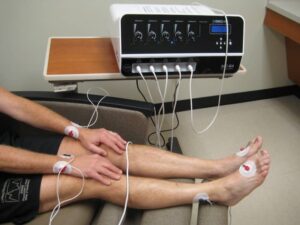
The setup is simple as shown in Figure 1 (Tom Smith’s legs). EKG electrodes are used to transmit the electrical impulses from a colored electrode to a black one, back and forth. The treatment is given for 30-45 minutes for up to 10 days in a row (excluding weekends). Our patients report a feeling like being bitten by electrical ants, or bee-stings. If the treatment is working, the sensation will change to a “hum” in the nerve and go to the ends of the nerve. We have to start above the painful area – remember, we are trying to replace the pain with a “non-pain” stimulus, and sometimes can work progressively down the legs and arms as pain relief occurs.


Figure 1: A typical setup to treat “stocking and glove neuropathy”

Colleagues at Mayo Clinic were skeptical and repeated the study in a larger group of people with CIPN. Pachman, Loprinzi and colleagues at Mayo reported about a 50% reduction in pain, numbness and tingling lasting at least 3 months. Of note, there appeared to be a learning curve, with the later patients getting better and longer lasting pain relief.

We will be the first to note that Scrambler Therapy lacks the “Good Housekeeping Seal of Approval” of cancer treatments – the well-designed, large, high statistical power, randomized controlled trial. We are both doing randomized trials, comparing Scrambler Therapy to “sham” (electrodes in the wrong place” and to TENS (trans-cutaneous electrical stimulation).

That said, we are interested in treatments that might work and don’t cause side effects. A recent review of at least 20 scientific reports noted no harm in any trial, with most reporting a substantial relief of pain. The two randomized trials comparing “sham” to real Scrambler Therapy showed a 50% reduction in low back pain, and a 91% reduction in pain from failed back syndrome, post herpetic neuropathy, and spinal cord stenosis. In all the trials, pain relief – if it happened – was obvious in the first 3 days, continued to get better, and usually lasted several months. There are additional reports of Scrambler Therapy having success in cancer somatic pain including bone and visceral metastases, complex regional pain syndrome, pediatric cancer chest wall pain, and others (see list below). The US Military has 17 Scrambler Therapy machines for treating both wounded warriors and civilians.

Some types of pain for which Scrambler Therapy has been used
Pancreas and abdominal cancer pain
Chemotherapy induced peripheral neuropathy
Non cancer pain such as neuropathic back pain
Post-herpetic pain (shingles pain)
Bone metastases
Spinal cord stenosis
“Failed back syndrome” – after surgery, the back hurts worse
Complex regional pain syndrome
Post-mastectomy pain 


Is Scrambler Therapy Related to Anything Similar?

Scrambler Therapy looks superficially likes TENS therapy. TENS applies similar electrodes on the skin and passes a pulse of electrical current between them. TENS is a completely different type of on-off current, and, classically, the effect wears off as soon as the electrodes are removed. When Scrambler Therapy works, it seems to reset or reboot the system for an extended period of time.

Spinal cord stimulation appears to have a same effect on pain that Scrambler Therapy appears to have. However, it involves putting electrodes on the spinal cord, and implantation of a pulse generator, similar to a pacemaker. It is also expensive – typically near $100,000 for a trial, then surgery and the equipment. It can last for years.


Is Scrambler Therapy Covered by Insurance?

Quick answer, no, not very well yet. They are waiting for more traditional evidence (unlike the U S Military!) Some places are doing it for free on the clinical trials listed on clinicaltrials.gov. There is a list of certified centers on the Calmare website. An increasing number of insurers are paying for Scrambler if the person and their doctor appeals with lots of evidence from the trials above.

The machines themselves are expensive ($105,000 was the last quote we got) but can be used for a new person each hour, and last for years. The electrodes cost $4-15 dollars per person for a course of treatment. A person with training can do the treatment supervised by a physician with knowledge of the nervous system.


What research needs to be done before Scrambler Therapy is proven effective, and reimbursed if it is?

We have been using Scrambler Therapy routinely at our centers, and believe there is benefit to some patients. At the same time, we are humbled by the many therapies that have shown promise in phase II trials only to be no better than placebo or sham in Phase III trials. We need bigger randomized trials, sponsored by the NIH or someone who is not trying to sell the machines.

Dr. Thomas Smith is the Director of Palliative Medicine, Harry J. Duffey Family Professor of Palliative Medicine, Johns Hopkins Sidney Kimmel Comprehensive Cancer Center

Dr. Charles Loprinzi is Regis Professor of Breast Cancer Research, Mayo Clinic

https://www.foundationforpn.org/2016/12/09/scrambler-therapy-for-treating-neuropathic-pain/

Rabu, 04 Januari 2017

Can Turmeric Curcuma Help With Neuropathy


Today's post from healthclover.com (see link below) looks at Turmeric as an alternative way of helping with symptoms of neuropathy. There are other posts about Turmeric on the blog (see list to the right) and it seems to be an 'up and coming' herbal treatment for various other ailments to, thanks to its anti-inflammatory properties. Certainly scientists are now looking at it more seriously due to widespread positive results. As with all these things, what works for some may not work for you but Turmeric won't interfere with other medications and seems to be worth a try. It's also cheap and easy to take in capsule form.


Turmeric: Herbal Treatment for Peripheral Neuropathy


Minggu, 06 November 2016

When Is The Earliest You Can Take A Pregnancy Test


Breve With Short Vowels

Breve With Short Vowels


What Diabetes Pills Can You Take With Insulin ::The 3 Step Trick that Reverses Diabetes Permanently in As Little as 11 Days.[ WHAT DIABETES PILLS CAN YOU TAKE .Diabetes Test During Pregnancy Diabetes Test During Pregnancy :: treatment of diabetic neuropathy - The 3 Step Trick that Reverses Diabetes Permanently in As .Diabetes Type 2 Test Diabetes Type 2 Test :: what is the diabetic exchange system - The 3 Step Trick that Reverses Diabetes Permanently in As Little as 11 Days..Can You Donate Plasma If You Have Diabetes Can You Donate Plasma If You Have Diabetes :: type 2 diabetes low blood sugar - The 3 Step Trick that Reverses .Gestational Diabetes Test Fasting Treatment Diabetes Alternative Diabetes Treatment Gestational Diabetes Test Fasting ::The 3 Step Trick that Reverses .How To Tell If You Are Diabetic Treatment Diabetes Alternative Diabetes Treatment How To Tell If You Are Diabetic ::The 3 Step Trick that Reverses Diabetes .


Stop And Start

Stop And Start

Seven Years Old Flute Music

Seven Years Old Flute Music


What Diabetes Pills Can You Take With Insulin ::The 3 Step Trick that Reverses Diabetes Permanently in As Little as 11 Days.[ WHAT DIABETES PILLS CAN YOU TAKE .Aloe Vera For Diabetes Treatment Diabetes Alternative Diabetes Treatment Aloe Vera For Diabetes ::The 3 Step Trick that Reverses Diabetes Permanently in As .Can You Donate Plasma If You Have Diabetes Can You Donate Plasma If You Have Diabetes :: type 2 diabetes low blood sugar - The 3 Step Trick that Reverses .Meal Ideas For Gestational Diabetes Treatment Diabetes Alternative Diabetes Treatment Meal Ideas For Gestational Diabetes ::The 3 Step Trick that Reverses .Gestational Diabetes Test Fasting Treatment Diabetes Alternative Diabetes Treatment Gestational Diabetes Test Fasting ::The 3 Step Trick that Reverses .Diabetes Type 2 Test Diabetes Type 2 Test :: what is the diabetic exchange system - The 3 Step Trick that Reverses Diabetes Permanently in As Little as 11 Days.. Can U Get Diabetes From Eating Too Much Sugar ::The 3 Step Trick that Reverses Diabetes Permanently in As Little as 11 Days.[ CAN U GET DIABETES FROM .


Kamis, 29 September 2016

Neuropathy Can Bring You To The Edge


Today's post from myneuropathybattle.wordpress.com (see link below) is an honest personal account of how neuropathy can be so severe that at times, it can make you want to give up the fight. Many people will be able to identify with this person's feelings and hopefully be discouraged from such thoughts by this lady's reasoning and solution. Hearing how other people are dealing with neuropathy can be invaluable in that you discover you're not alone and can share and even learn from, other people's experiences.


My Neuropathy Battle:
Suicide Isn’t Painless
Feb24 ARCHIVE | FEBRUARY 2013

When I was in my early twenties I used to think about it all of the time. Life wasn’t going well for me at the back then. I had to give up work to have surgery, I was in a lot of pain; the days seemed endless and pointless.

I’ve heard it said many times that suicide is the easy way out, however, there isn’t anything easy about being in such a dark place and living a life so drained of anything good that suicide seemed the only option ,and I know from own experience that suicide is not painless for those left behind.

At my lowest ebb I was on strong painkillers, not strong enough, obviously, as I was in constant pain and couldn’t see past the pain. I came as close as counting out pills and I would’ve taken them but one thing stopped me: while I could have quite happily have done that to myself, I could not do that to anyone else.

It would have been the people I love the most who would’ve been left to carry what I had done around with them for the rest of lives and as difficult as my life was as the time, that thought was enough to stop me.

Years on, I can safely say I am not in good place. I am in constant pain but this time because of TMJ and I am struggling with every day things because of my muscle wasting condition, however, I am older and a bit wiser and I have strength to overcome it.

Life is still good in many ways and I’d rather have life with all of its highs and lows and bits in between than not have the opportunity to wake up to a brand new day.

Everyone has bad days or bad phases in their life when everything seems to go wrong and that’s all it is: it’s just a phase and it too shall pass.

http://myneuropathybattle.wordpress.com/2013/02/

Minggu, 07 Agustus 2016

Can Cognitive Behavioural Therapy Help With Neuropathic Pain


Today's post from kcl.ac.uk (see link below) talks about a new research study into the psychological and physical effects of HIV-related neuropathy. It aims to encourage psychological treatments via the internet, for people who aren't responding very well to the standard treatments. It's based on the premise that new cognitive behavioural therapy may help people to respond better to the pain. It began in January of this year but is still taking on people who are interested in joining the study. It's a laudable mission and who knows; if these methods work, they could also work for other people with chronic pain issues from neuropathy - there's no reason why this group should be exclusive. Further details below.

The OPEN Study
King's College London 2016
 

Online Psychological Treatment for People with Painful HIV-related Peripheral Neuropathy (The OPEN Study)

The OPEN study aims to understand how people with HIV and pain in their feet cope with this pain, and to develop and test a new psychological treatment approach to manage the impact of this pain on people’s lives.

Why are we doing this study?
Many people with HIV experience pain in their feet due to peripheral neuropathy, which may be related to HIV or its treatments. This pain is often not relieved by medical treatments.
Psychological treatments, such as cognitive behavioural therapy (CBT), have been shown to help improve functioning and quality of life in people with chronic pain. However, little is known about whether CBT is helpful for people with HIV and peripheral neuropathy.
It can be difficult to access CBT for managing pain, so we are working to develop a version of CBT delivered over the internet to increase the availability of this treatment for people with HIV and peripheral neuropathy.
What are we doing?

Part 1

Starting January 2016: We are undertaking a systematic review of the evidence about psychological factors (e.g., depression, anxiety, thinking patterns, coping behaviours, social support, etc) associated with chronic pain in people living with HIV. This review will help us identify factors that are important to consider within CBT for people with HIV and peripheral neuropathy.

See a summary of the protocol for this review at the PROSPERO website,

Part 2 - Now recruiting participants

From November 2016 to June 2017 we will conduct interviews with approximately 30 people living with HIV and peripheral neuropathy.
The interviews will ask people how they cope with pain, and their thoughts on a version of CBT delivered over the internet.
If you would like to participate in this study please see the recruitment advertisement and participant information sheet for more details.

Part 3 

We will develop the new online CBT for people with HIV and peripheral neuropathy based on data gathered from the systematic review and interview study.
We will ask people living with HIV and peripheral neuropathy to provide feedback on the new treatment once developed.
From May 2018 – August 2019 we will conduct a small randomized controlled trial comparing the new online CBT to a control group to see how satisfied people are with this treatment and whether it is feasible to do a larger study. Approximately 70 participants with HIV and peripheral neuropathy will be recruited for this study.

Funding Ethics Study team Contact us


Please contact Dr Whitney Scott if you would like to know more about the OPEN Study:

Whitney Scott, PhD

NIHR Postdoctoral Fellow

Health Psychology Section

Institute of Psychiatry, Psychology, and Neuroscience

King's College London

5th Floor Bermondsey Wing, Guy's Campus

London SE1 9RT

Email: whitney.scott@kcl.ac.uk

Tel: 020 7188 5421

http://www.kcl.ac.uk/ioppn/depts/psychology/research/ResearchGroupings/healthpsych/research-group/The-OPEN-study.aspx